A Water-Saving System At The Plant Level

Solar Guard works with your crop’s natural processes to reduce water loss, maintain productivity, and improve water use efficiency — even in extreme heat. Forming an ultra-thin, effectively light dispersing layer on the leaf surface allows the light plants need for photosynthesis. This reduces evapotranspiration, and allows the plant to stay active during the hottest parts of the day. Instead of shutting down and wasting water, crops continue turning that water into growth — resulting in more crop from every gallon applied.
progress-bar-2
Protective Light Dispersing Layer: Forms an invisible coating that helps stabilize leaf conditions and reduce environmental stress.
progress-bar-3
Maintains Photosynthesis: Keeps plants active and converting water into growth during stressful conditions.
progress-bar-4
Slows Water Loss: Reduces evapotranspiration so more water stays in the plant where it drives yield.
progress-bar-2
Improves Water Efficiency: Helps crops produce more growth from the same amount of water..

The Science of Water Efficiency

Plants are solar-powered systems — but under heat and high UV, they shut down and lose water rapidly. Solar Guard keeps plants functioning by reducing heat stress (black body radiation), stabilizing leaf conditions, and improving how efficiently water is used.
icon-water-to-growth

How Plants Turn
Water into Growth

Photosynthesis is how plants convert sunlight, water, and CO2 into bio-mass. But this only works efficiently when the plant is not under stress.

When plants are stable:
  • Water drives growth
  • Energy production stays high
  • Yield potential is maintained

What Happens
When Heat Increases?

Temperature rises above 85 degrees and UV index exceeds 7 (“normal UV index on a clear day is usually 6-7 in the summer). When temperatures rise and UV intensifies:
icon-photosynthesis

Photosynthesis
Slows Down

Plants shut down to protect themselves, reducing growth. During extreme heat and high UV, chloroplasts limit activity to avoid damage, which slows or pauses photosynthesis and chloroplast avoidance system.

plus
icon-water-loss-drop-1

Water Loss
Increases

Heat drives rapid evapotranspiration, wasting applied water. As leaf temperatures rise, plants lose more moisture through transpiration, meaning less of the water you apply contributes to growth.
yellow-lines-guide

Resulting In
Stress To Crops

All of this results in several hours per day of stress to your crop during peak growing season. On a typical sunny summer day, the UV index usually climbs above 6 (High) for about 4–6 hours around midday (solar noon). That’s 4-6 hours that a plant is essentially “turned off” and not growing.
yellow-lines-guide
icon-sg

How Solar Guard
Changes The Equation

icon-leaf-efficiency

Increase Functional
Leaf
Efficiency

Solar Guard optimizes how light interacts with the leaf, allowing more of its interior to actively contribute to growth. By reducing plant stress, fewer areas of the leaf shut down during peak conditions, resulting in more consistent photosynthesis, better use of the plant’s full capacity, and longer leaf retention in tree crops later into the fall.

icon-improve-water-use

Improves
Water Use

Efficiency

Smart Cal++ nano goes into the plant, its calcium nutrient, building strong cell walls and helping the chloroplasts. Not only is Solar Guard continuing the natural calcium absorption, its adding to it. It’s like giving a body builder a protein shake.
icon-reduced-carbon-footprint

Reduced
Carbon Footprint

Solar Guard enhances the way plants use sunlight, helping them absorb more carbon dioxide and turn it into bio-mass. The result is up to 20% more clean oxygen released back into the atmosphere, offsetting your fossil fuel use.
yellow-lines-guide
icon-more-growth

More Growth
Less Water Waste

With Solar Guard, crops spend less time shut down and more time growing.

  • More efficient water use
  • Stronger performance under stress
  • More consistent yields

Healthier Crops. Stronger Harvests.

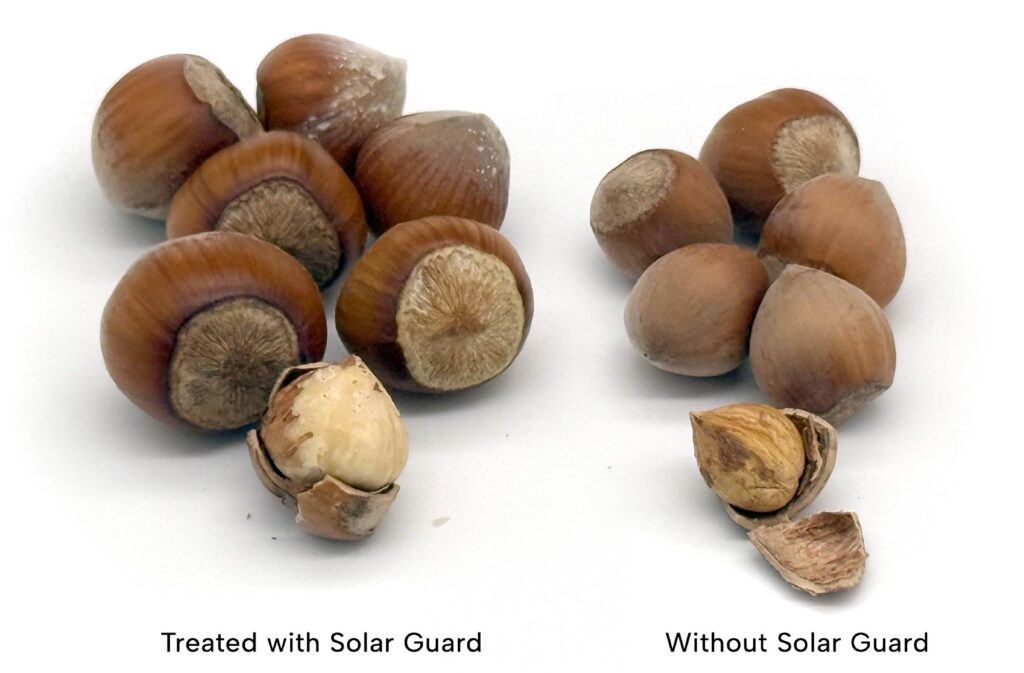
This comparison shows hazelnuts grown without Solar Guard versus those treated with SMART CAL++. By improving water use efficiency, and keeping photosynthesis active, Solar Guard helps crops thrive under intense summer conditions.
Hazelnuts treated with Solar Guard vs without